
- Time
- Half a dayFrom central Beijing, door to door
- Entry
- ¥45 $6.7Cable car ¥100 $15 up, toboggan ¥100 $15 down
- Distance
- 2.5 km restoredAbout two hours at a walk
- Crowds
- Light before 10:00Heavy 11:00–14:00
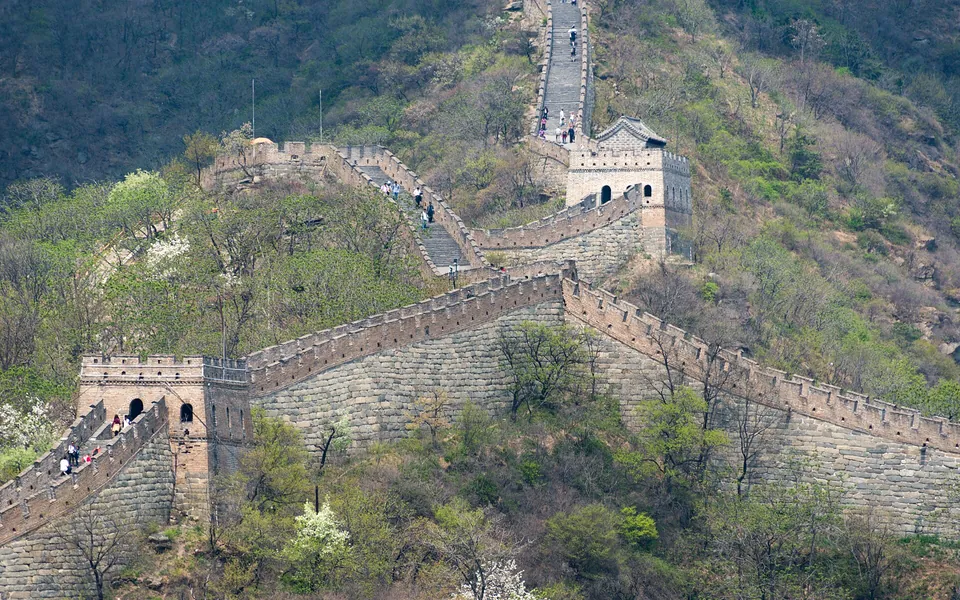
There are three Great Wall sections within reach of Beijing, and they are not interchangeable. Badaling is the one on the banknote and the one every tour bus goes to. Jinshanling is unrestored and a serious hike. Mutianyu sits in between: restored enough to walk safely, far enough out to be quiet, and built along a ridge that actually looks like the photographs.
What you are walking
Twenty-three watchtowers over about 2.5 km, climbing and falling along a spur of the Yanshan range. The surface is uneven — original brick in places, replaced stone in others — and the gradient is steep enough that you will be breathing hard by the third tower.
The classic route is tower 14 to tower 20, which is the steepest and the most photographed stretch. From tower 20 the wall is unrestored and technically closed; people go anyway, and it is genuinely dangerous where the parapet has collapsed. Do not.
The metal toboggan run from tower 6 back to the base is 1.5 km of downhill track and costs ¥100 $15. It is the one tourist gimmick at Mutianyu that is actually worth the money. It closes in rain.
Getting there without a tour
Bus 916 Express from Dongzhimen to Huairou North Street (about 90 minutes, ¥12 $1.80), then a local taxi or the h31 shuttle to the Mutianyu car park (¥30–50 $4.5–7.5). Total cost under ¥100 $15 each way. The last bus back leaves Huairou around 18:00, so do not linger.
Alternatively a Didi from central Beijing is ¥250–320 $37–48 each way and takes 90 minutes. Four people splitting it costs about the same as the bus plus taxi and saves two hours.
When to go
October is the reason this section is famous — the ridges turn rust and gold and the air clears. Spring is dusty. Summer is green but hot and crowded. Winter is empty, cold, and the wall under snow is the best version of it if you can take −10°C.